
How It Works
Press a Button. Get Guided Track Retention.
From hidden housing to engaged side-channel retention in seconds. Here is exactly what happens when you deploy a V-Track motorized screen.
Step 1
The Screen Descends
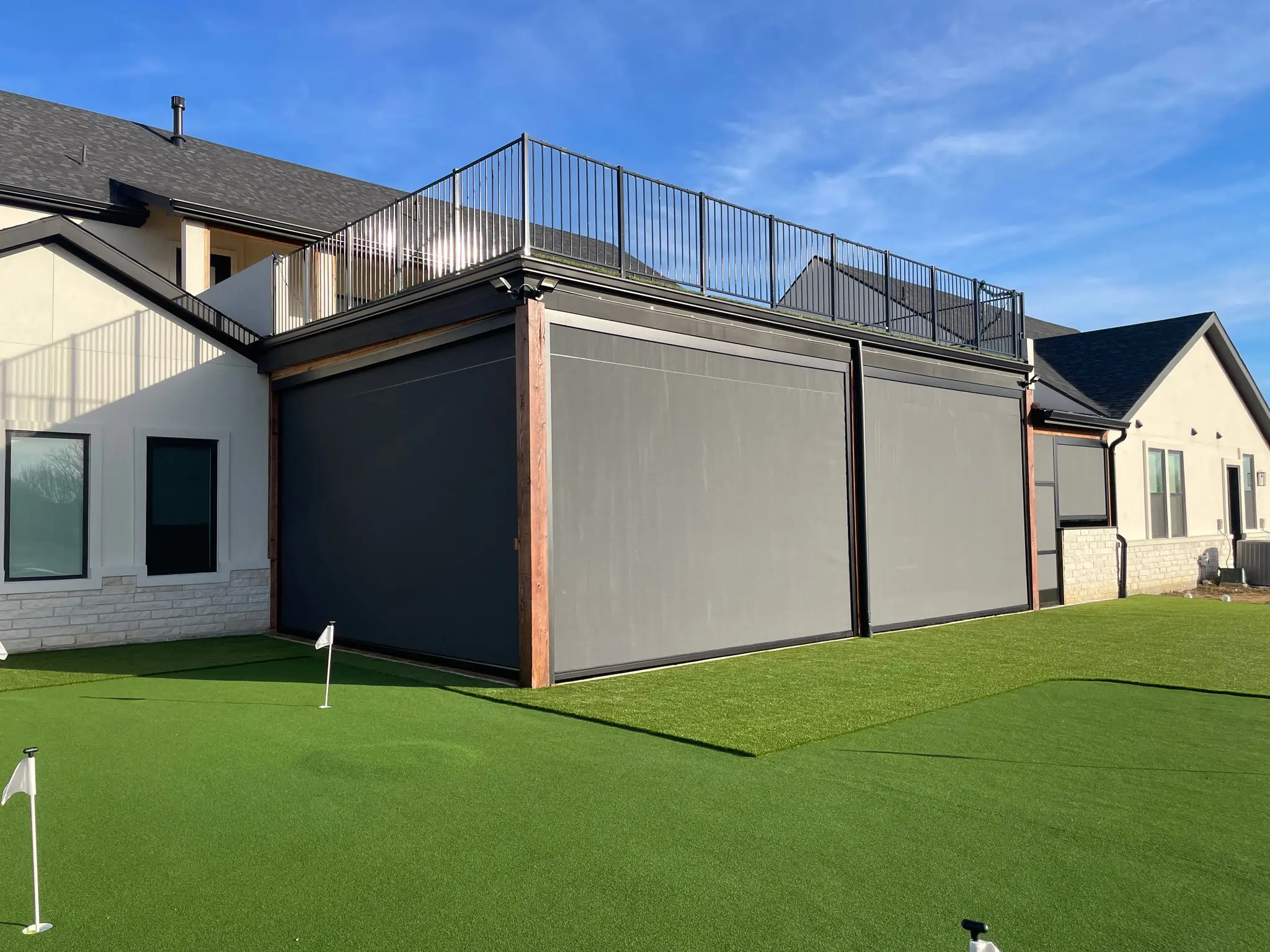
A tubular motor inside a compact housing rolls the screen fabric down on command. When retracted, the entire system hides above the opening — completely out of sight.
You won't see tracks, fabric, or hardware when the screen is up. The housing is powder-coated to match your home's trim, and the screen deploys smoothly with the push of a button, a voice command, or a tap on your phone.
Step 2
Fabric Locks Into the Track
As the screen lowers, the V-Screen Retention System engages. A continuous bead welded to the fabric edge slides into extruded aluminum channels running the full height of the opening.
This is mechanical retention — not clips, not tension, not friction. The fabric is physically locked inside the channel at every point. Wind actually pushes the fabric tighter into the track. There is nothing to pop loose, fatigue, or fail.

Step 3
Engaged Along the Full Channel
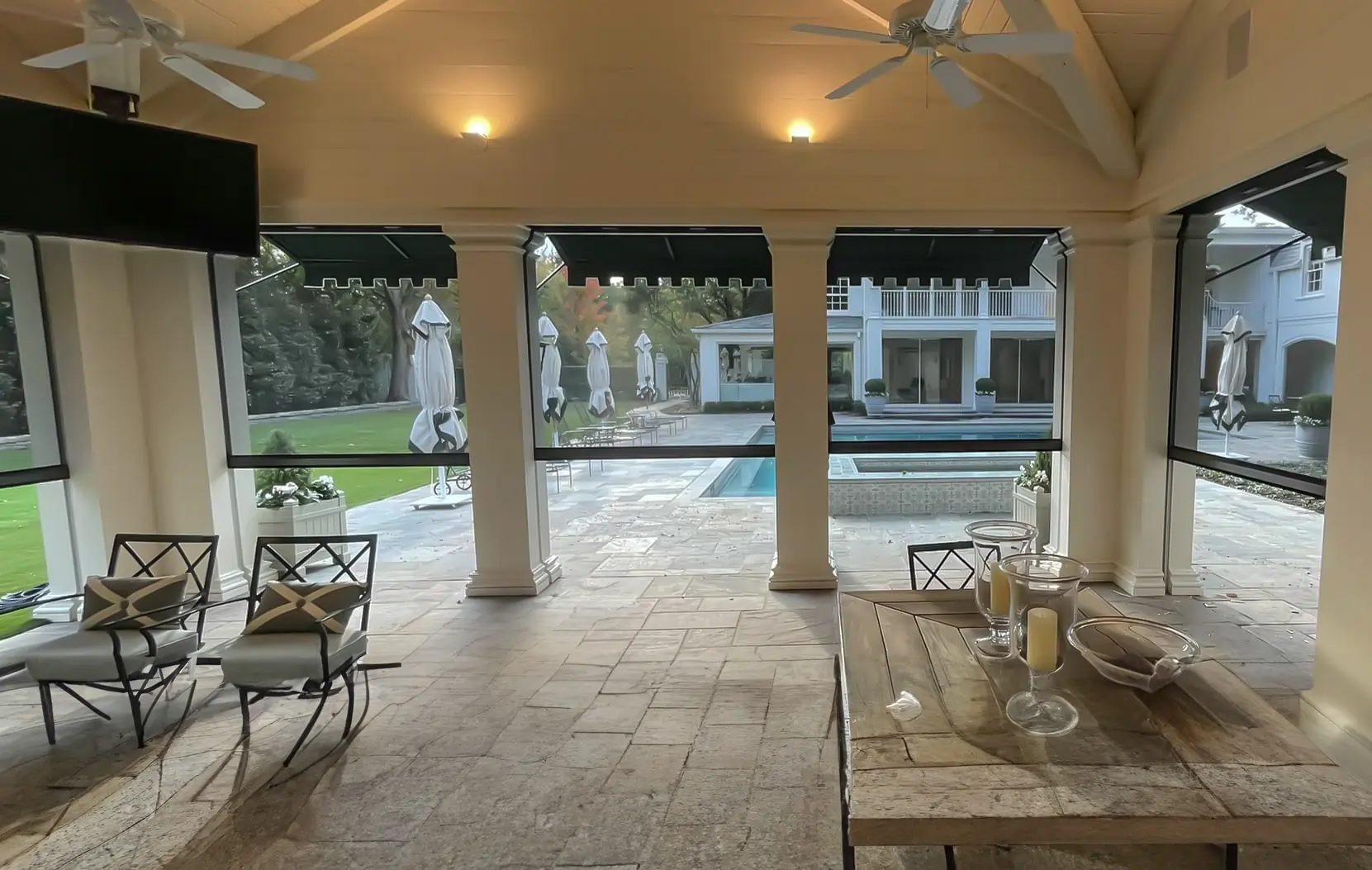
The bottom bar engages spring-loaded wheels inside the track, completing continuous retention along the full channel — wind-resistant, helps reduce side-edge movement, helps block insects and wind-driven rain.
The screen is now locked in continuous contact along the full channel length. When you are done, press the button again and the screen retracts fully into the housing — disappearing from view in seconds.
The Difference
V-Track vs The Competition
Not all motorized screens are built the same. Here is how V-Track compares to cable-guided and zipper systems.
| Feature | V-Track | Cable-Guided | Zipper / Zip Track |
|---|---|---|---|
| Retention Method | Mechanical lock (continuous) | Tension cables | Zipper teeth |
| Wind Resistance | 100+ mph tested | Fabric billows at 20-30 mph | Zipper can jam under load |
| Insect Containment | Continuous side-channel retention | Gaps at cable entry points | Good when zipper is intact |
| Maintenance | None — passive mechanical | Cables need re-tensioning | Zipper teeth wear and jam |
| Noise | Silent retention | Cables vibrate in wind | Zipper noise on deploy |
| Longevity | No wear parts in track | Cables stretch over time | Zipper teeth degrade |
Continue Exploring
Learn More About V-Track
Want to see it in person?
An authorized dealer can demonstrate how the screen locks into the channel and walk you through the system.
Find a Dealer