
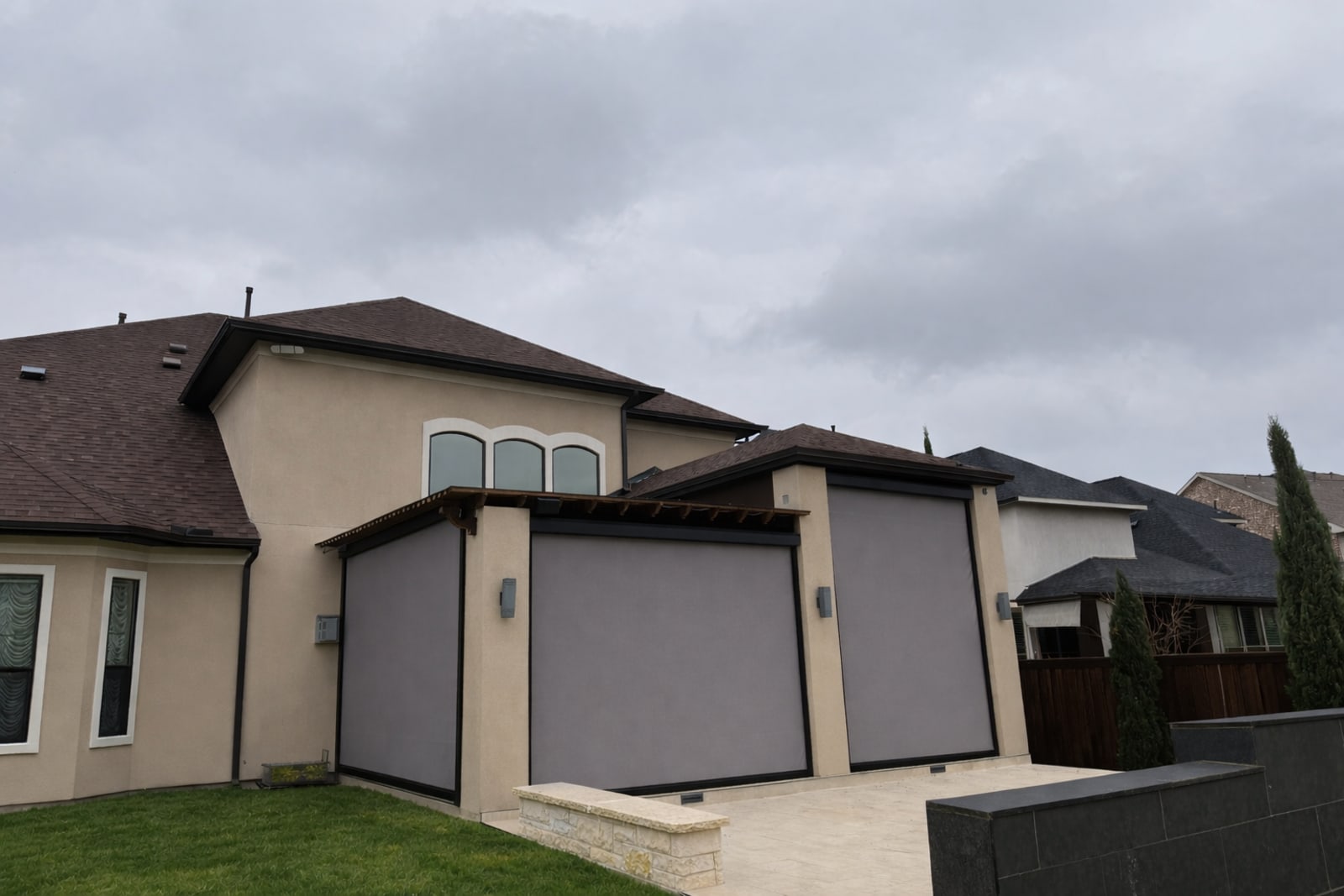
The System Matters More Than the Fabric
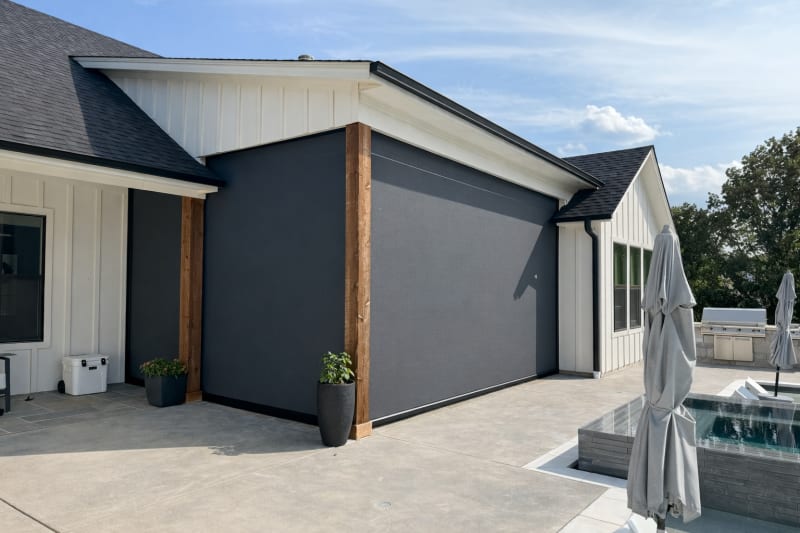
Measured Solar Reduction
Solar screen fabric intercepts radiant heat and UV before it enters your space. Openness percentage determines how much energy is blocked — from light filtering to near-total solar rejection.
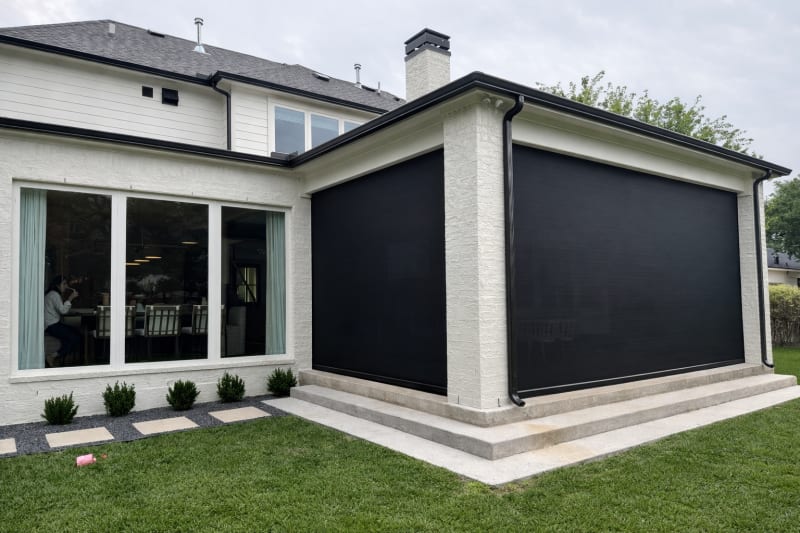
Wind-Stable Retention
V-Track's continuous track system holds solar mesh taut across the full span. No flapping, no edge gaps, no rattle — even in sustained wind conditions that compromise other systems.
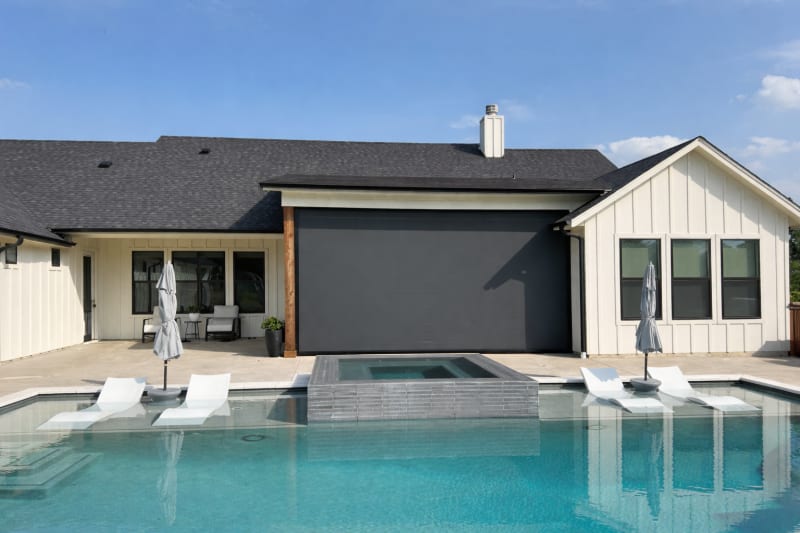
Architectural Integration
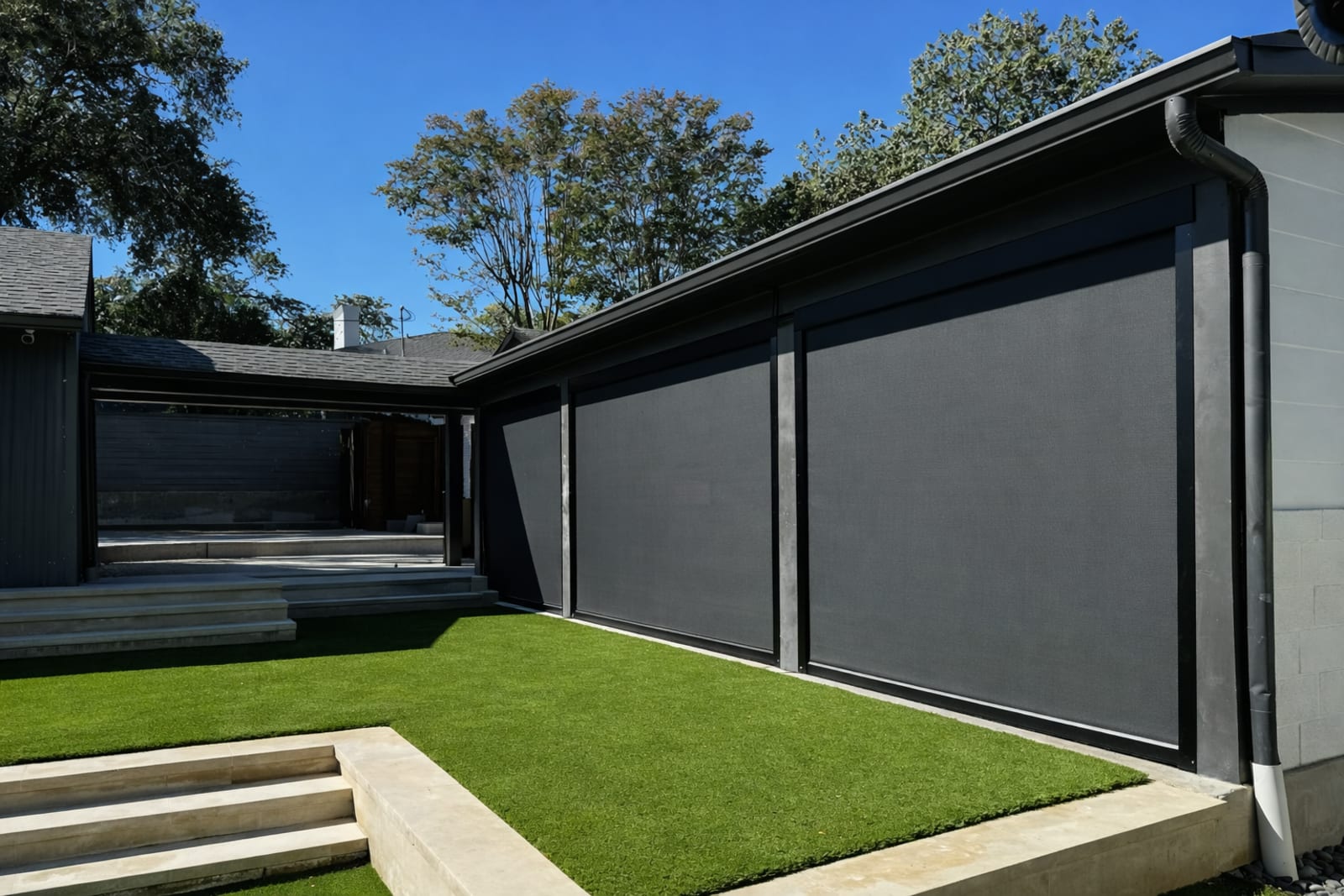
Clean sightlines. Tight tolerances. Motorized solar screens that retract completely when not needed and deploy flush when they are. Designed to complement the structure, not compete with it.
How Solar Screens Work
Solar screen fabric is an engineered mesh that intercepts radiant energy before it enters your space. The tighter the weave, the more heat and UV it rejects — and V-Track's sealed retention keeps the fabric performing at spec, not flapping loose.
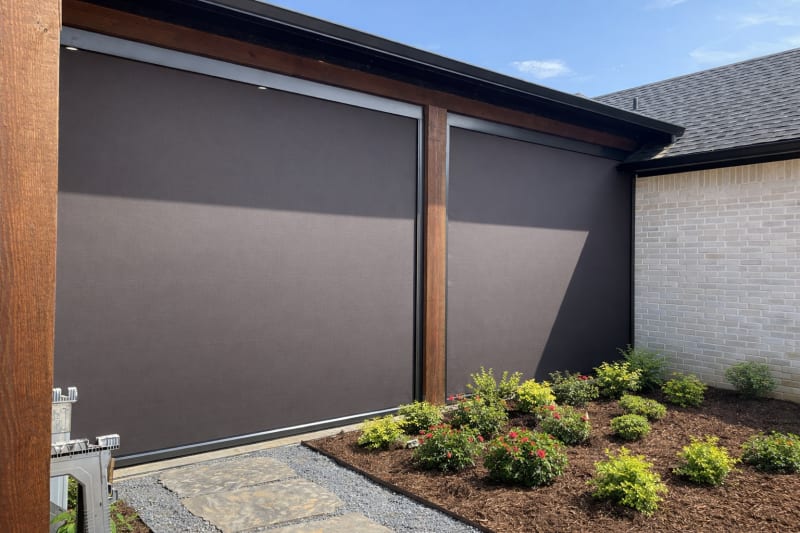
Openness Controls the Experience
Choose 80%, 90%, or 95% openness depending on your heat rejection and visibility goals. Higher openness preserves views; lower openness increases shading and energy reduction.
Sunlight Hits the Fabric
Direct solar radiation strikes the woven mesh surface. The fabric's openness factor determines how much energy passes through versus being absorbed or reflected outward.
Heat & UV Are Intercepted
The mesh absorbs infrared heat and blocks UV radiation before it reaches your skin or furnishings. A 95% openness fabric rejects significantly more energy than an 80%, while both preserve visibility.
Airflow Passes Through
Unlike solid panels or glass enclosures, solar mesh allows natural ventilation. The space stays cooler without feeling sealed off — comfortable shade with cross-breeze.
V-Track Keeps It Performing
Loose fabric flaps, billows, and loses contact. V-Track's continuous track retention holds the mesh taut across the full span — maintaining consistent solar performance even in wind.
Select Your Solar Openness
Lower openness = greater solar rejection. Higher openness = greater visibility and airflow. Every level uses the same V-Track engineered retention system.
Available Fabric Colors
Selected Color: Black
Architectural Frame Finishes
All finishes use the same structural aluminum profiles. Finish selection affects architectural integration — not performance.
Explore Other Outdoor Screen Options
Solar screens are one configuration of the V-Track system. If you're looking for full insect protection or seasonal weather enclosure, explore the other screen types below.
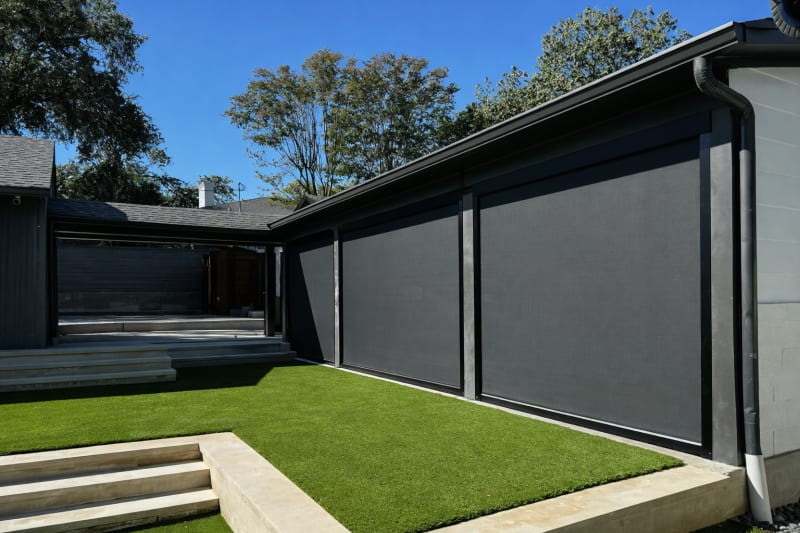
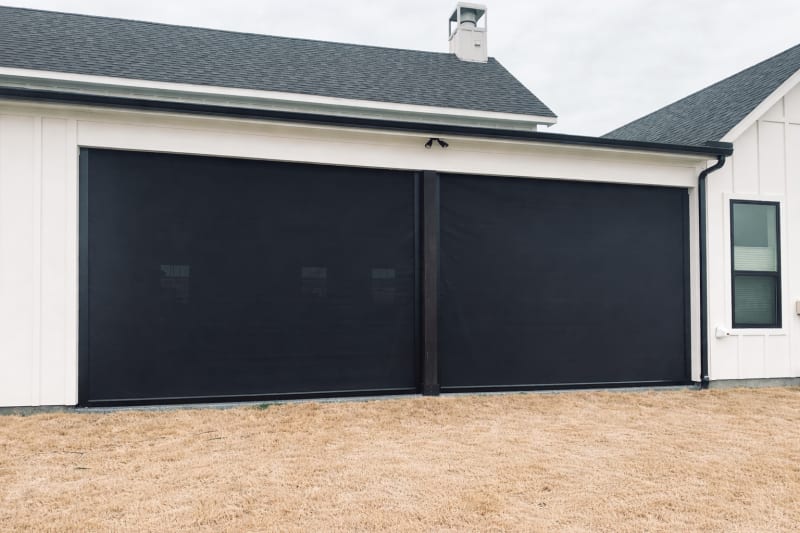
Performance Overview
All openness levels are engineered for tension control and wind stability. Only solar filtration changes.
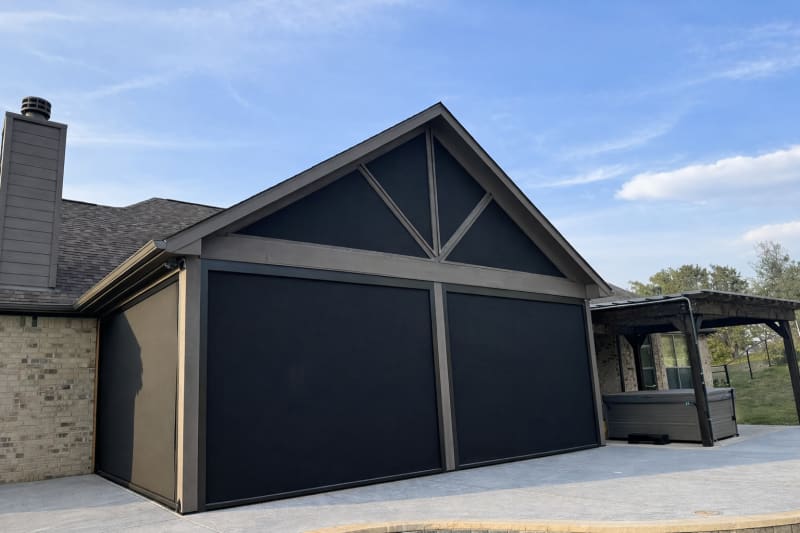
99%
Maximum Solar BlockMaximum UV filtration and heat rejection for extreme climates. Engineered for environments where unmanaged solar load makes outdoor spaces unusable.
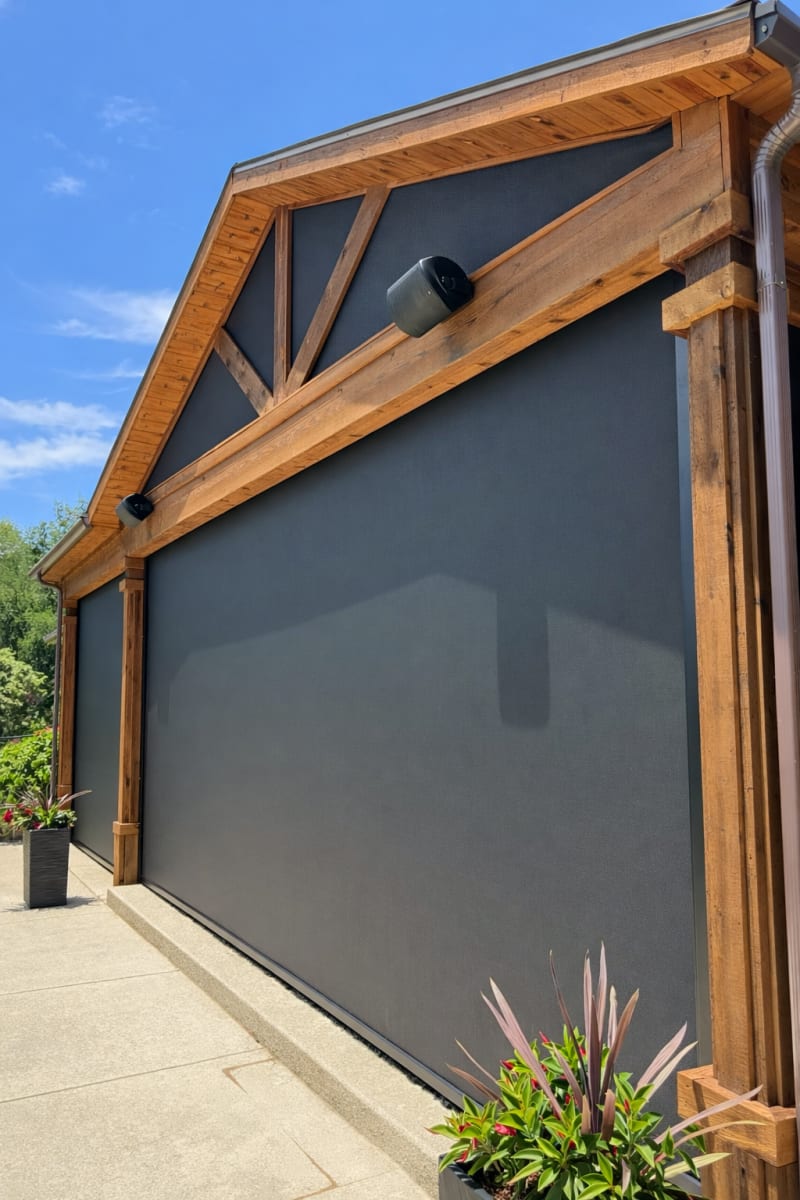
95%
High Solar BlockSignificant heat and UV rejection for aggressive western or southern exposure. Reduces surface temperatures and extends comfortable use into late afternoon.
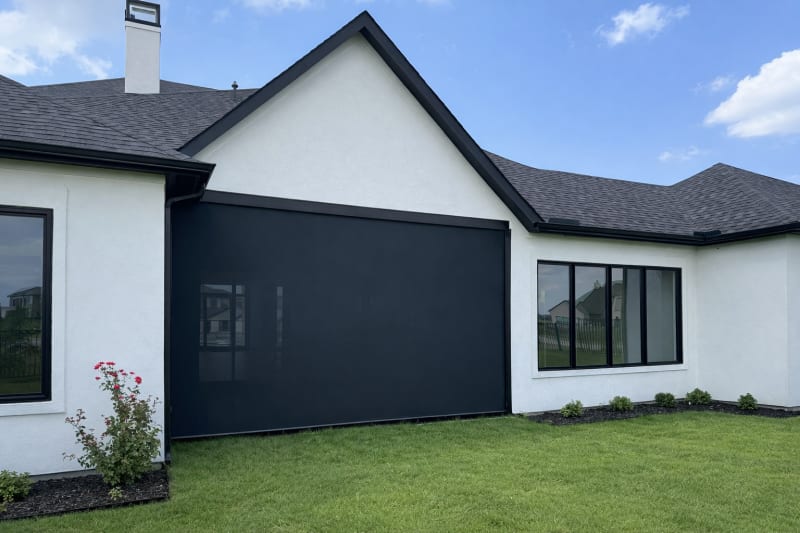
90%
Standard SolarMeaningful radiant heat reduction for everyday sun exposure. The most widely specified openness level for residential outdoor living.
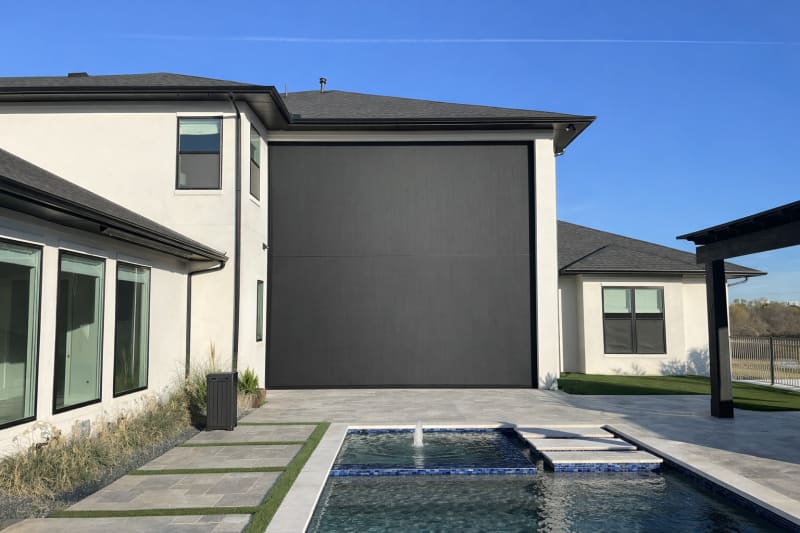
85%
Balanced SolarImproved glare control with strong outward clarity. A practical middle ground for patios with moderate afternoon sun.
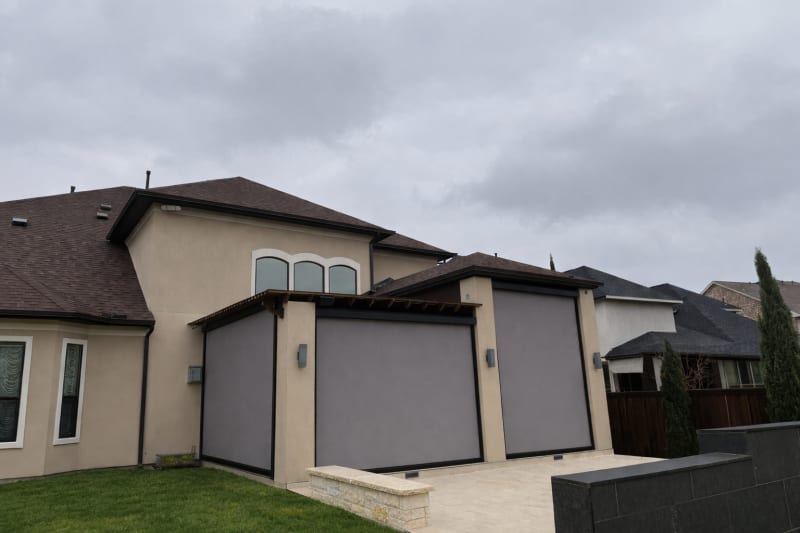
80%
Maximum VisibilityMinimal visual obstruction with light solar filtering. Best where preserving the view is the priority and sun exposure is partial or intermittent.
Where Solar Screens Make the Difference
Solar screens solve specific problems for specific spaces. Here are the scenarios where our customers see the most impact — and the openness levels that match.
90–99% Recommended West-Facing Patio — Afternoon Sun
The most punishing exposure in residential outdoor living. Direct western sun raises surface temperatures 20°+ and makes patios unusable from 2–7 PM in summer months. Higher openness solar screens block the worst of the radiant heat while keeping the view open.
Explore Sun Protection Solutions 85–95% Recommended Restaurant Patio — Guest Comfort
Guests leave when they're uncomfortable. Solar screens let restaurants extend outdoor seating hours and seasons without enclosing the space. Diners stay longer, servers work more comfortably, and the atmosphere stays open and inviting.
Restaurant Patio Solutions 80–90% Recommended Outdoor Kitchen — Cook Without Baking
Grilling in direct sun compounds heat from the grill itself. Solar screening over an outdoor kitchen creates a working shade zone that reduces ambient temperature without blocking airflow — critical when you're standing over a heat source.
Screened Patio Ideas 85–95% Recommended Pool Area — UV Exposure Reduction
Extended poolside time means extended UV exposure. Solar screens over a pool lounge or cabana area significantly reduce UV reaching skin without creating a dark, enclosed feeling. Especially important for families with children.
Explore Sun Protection SolutionsOur Trusted Partners
Premium fabric and component suppliers
Explore Retractable Screen Systems
- Motorized patio screens — retractable screens engineered for residential patios and outdoor living spaces.
- Retractable patio screens — deploy when needed, disappear into a hidden housing when you don't.
- Motorized outdoor screens — four-season retractable screens for porches, pergolas, pool areas, and large openings.
Published by Keder Screens — makers of V-Track